

How Do I Cover Up Acne On Chin With Makeup
Can Makeup Cause Acne?
Yep It Tin can. Be Sure to Select and Use Makeup Wisely.
The Essential Information
While most acne today is relatively safe to utilize, some makeup products can still pb to acne. This is such a well-known phenomenon that dermatologists take a proper noun for it:acne cosmetica.
It can accept months for acne cosmetica to show upwardly on the skin, and because information technology doesn't always show upwards right away this can get in difficult for the person to realize it was makeup that caused it. When information technology does finally bear witness upward, it oft looks similar many small, not-inflamed (not red or sore) bumps, merely can also come up with run-of-the-mill inflamed (cherry and sore) pimples also.
When makeup causes acne it can pb to a vicious cycle:
- Makeup causes acne -->
- More than makeup is needed to comprehend information technology upwardly -->
- More than acne is produced -->
- More makeup is needed to comprehend it up -->
- Etc.
Some things you can practice to break the cycle include:
- Going makeup-free whenever possible.
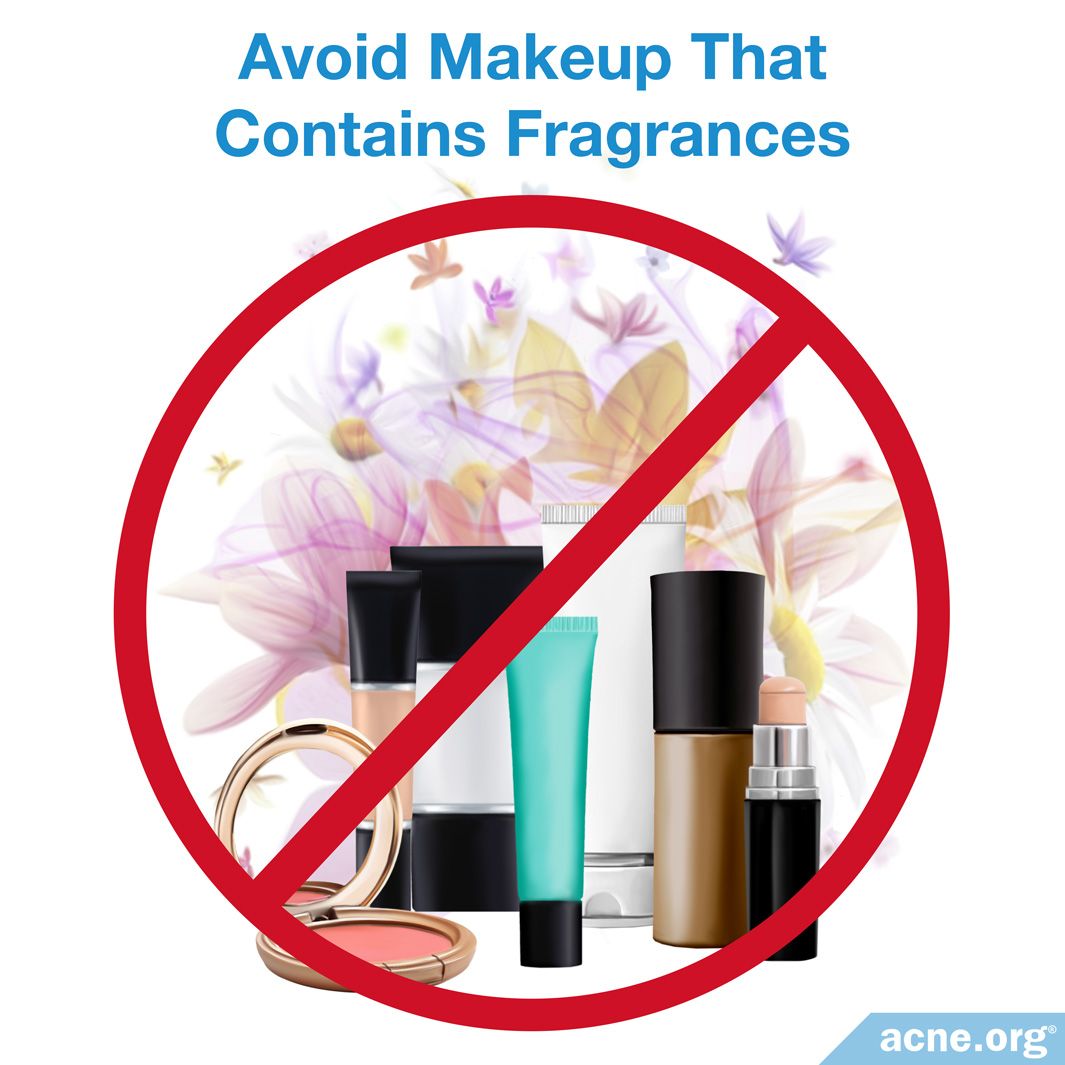
- Selecting non-comedogenic (volition not clog pores) products - this normally means choosing sheer, lite-coverage, fragrance-free, water-based products marketed toward a younger demographic.
- Applying and removing makeup using a featherlight touch. Concrete irritation of the skin tin beal acne, and then stay extremely gentle.
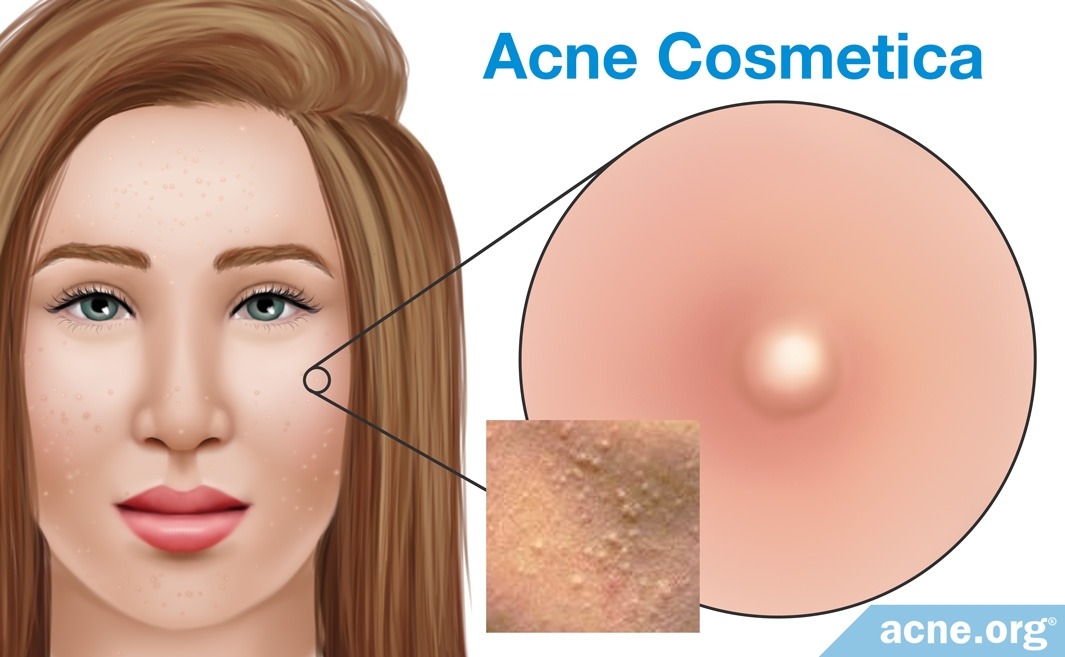
Information technology's a real concern: Cosmetic-induced acne is and then widespread that it has its own name, acne cosmetica. Contempo proof that makeup can crusade acne comes from a recent Brazilian study in which 45% of women had dermatoses (skin disease) associated with the cosmetics they were using and 14% had active skin lesions due to cosmetics.1
Where it occurs: People typically experience cosmetic-induced acne on the chin and cheeks more than on the brow. ii Information technology presents every bit small-scale, whitish bumps, sometimes referred to every bit "grains," which are more noticeable when the peel is stretched. It can also show up as crimson, garden variety pimples.
It can take months to form: Cosmetic-induced acne can take months to form which can lead to confusion as a breakout seems to come out of nowhere, when in fact, cosmetics slowly caused the acne to form over time.
It tin can be long-lasting: Cosmetic-induced acne tends to exist stubborn, sometimes lasting for years every bit the person using makeup enters into a vicious cycle of covering the breakouts, which lead to further breakouts.
Roughly applying makeup can contribute to it: Applying makeup as well roughly can lead to irritation which can also aggravate acne.
Wearing makeup shouldn't interfere with topical treatments: Fortunately, preliminary research suggests that wearing makeup during the day won't interfere with topical acne treatments.5
How to Avoid Makeup-induced Acne
- Go bare when you tin can
- Utilise makeup as sparingly as possible
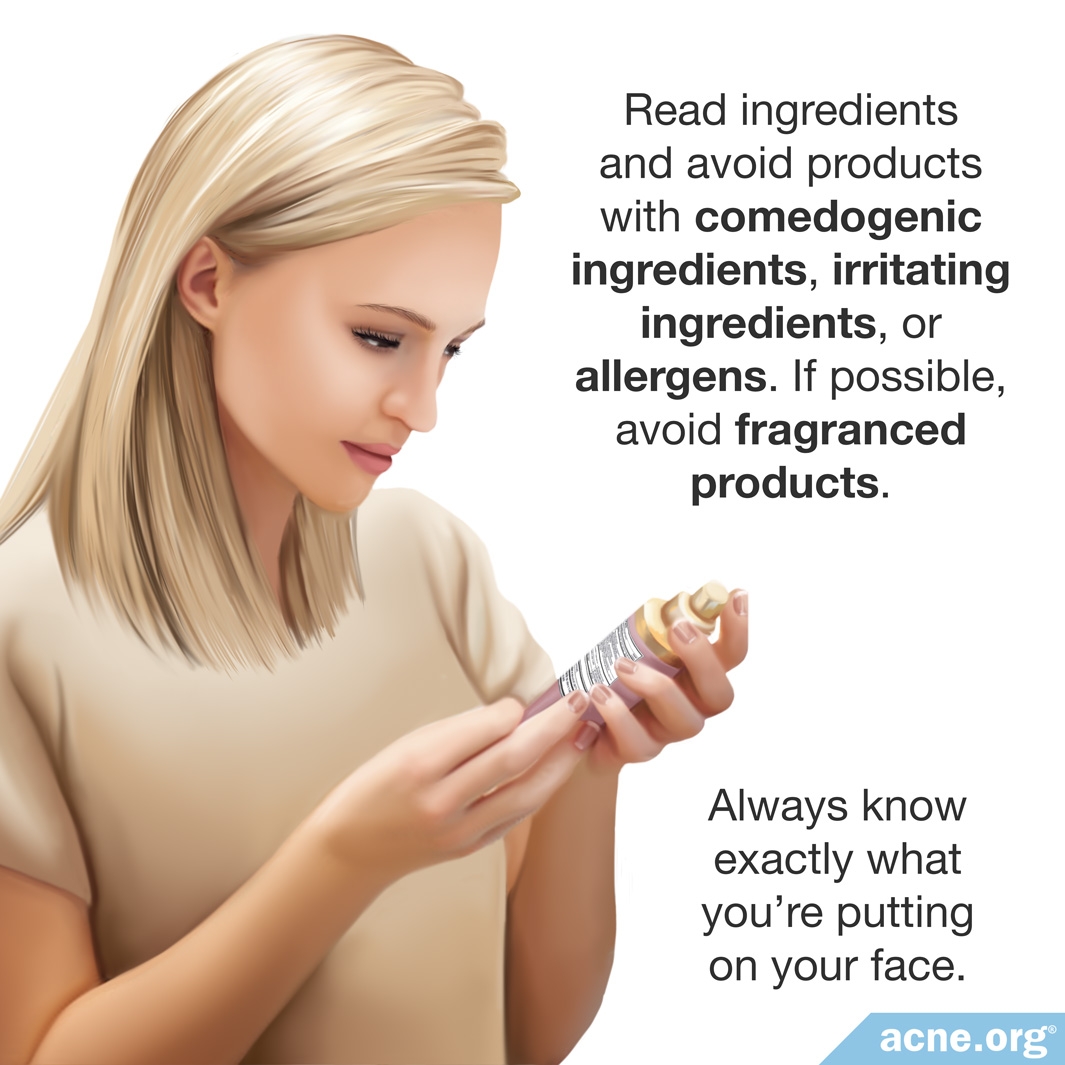
- Choose sheer, h2o-based, non-comedogenic (won't clog pores) products
- Choose a mass-marketplace makeup brand that is aimed at a younger demographic
- Apply makeup products using a featherlight touch to minimize irritationthree,4
- Gently remove makeup at the finish of the day and go on with your usual anti-acne routine
What Are the All-time Makeup Choices?
Not all makeup causes acne, merely the incorrect makeup products certainly tin.3 Unfortunately, at that place is no consensus on any "rubber" makeup products.
Choose sheer or light coverage varieties which specifically claim to be non-comedogenic and are fragrance-free. Large, drugstore brands which are made for a younger, more than acne-decumbent audience tend to be a safer choice than department store varieties, and less expensive to boot.
"Acne-fighting" or "anti-acne" makeup can be a safer option because that means the manufacturer is likely thinking about acne-decumbent pare when formulating their makeup. Nevertheless, near "anti-acne" makeups just contain 0.v% salicylic acrid, which will do very piffling to treat acne. Still, "anti-acne" makeup may exist safer.
Mineral makeup should as well be fine every bit long as it does not cause itchiness, which is a sign of irritation and can lead to scratching (further irritation).
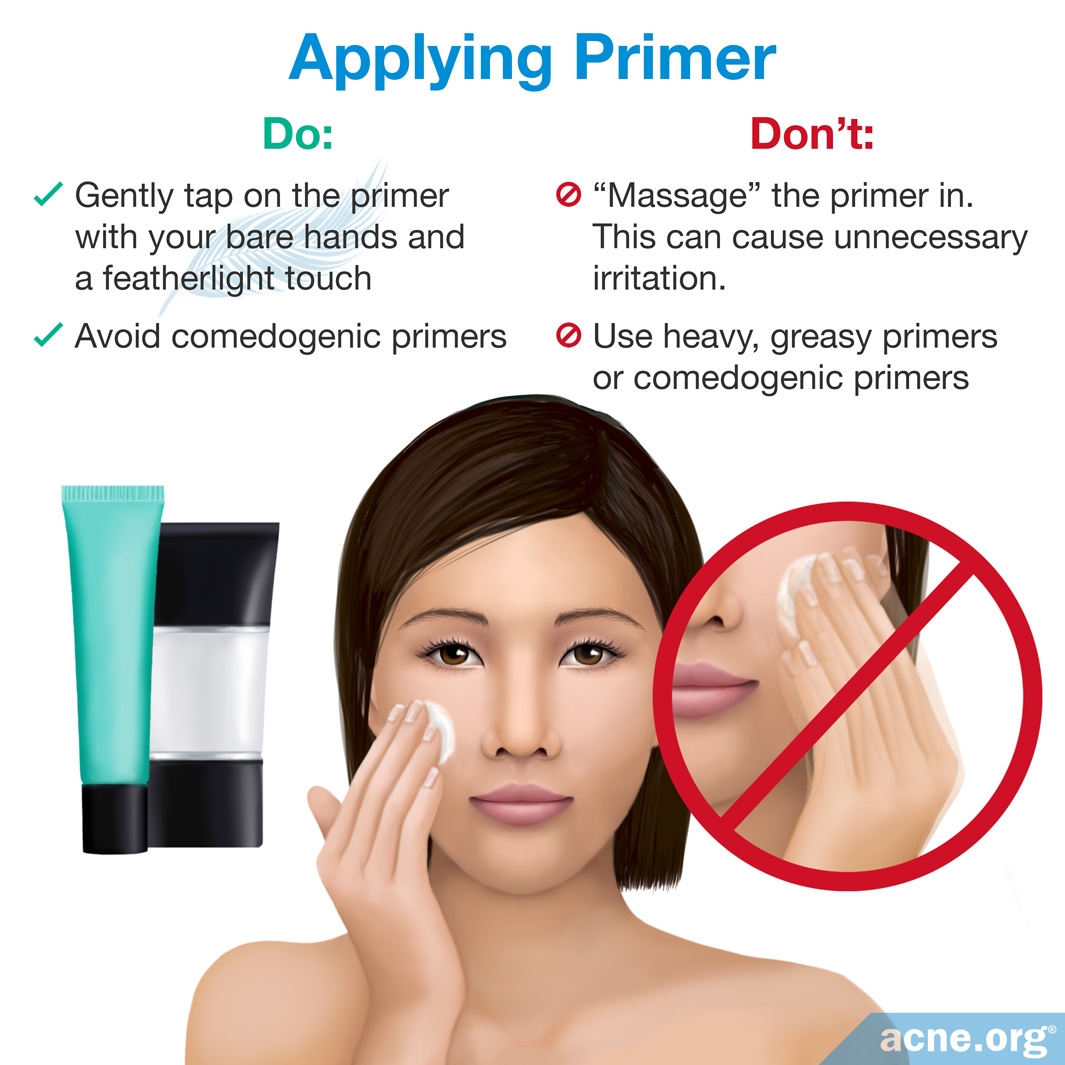
Tips for Using and Applying Diverse Types of Makeup
Now that y'all have chosen a safe makeup, follow these do's and don'ts to ensure that makeup stays your friend instead of causing you trouble.
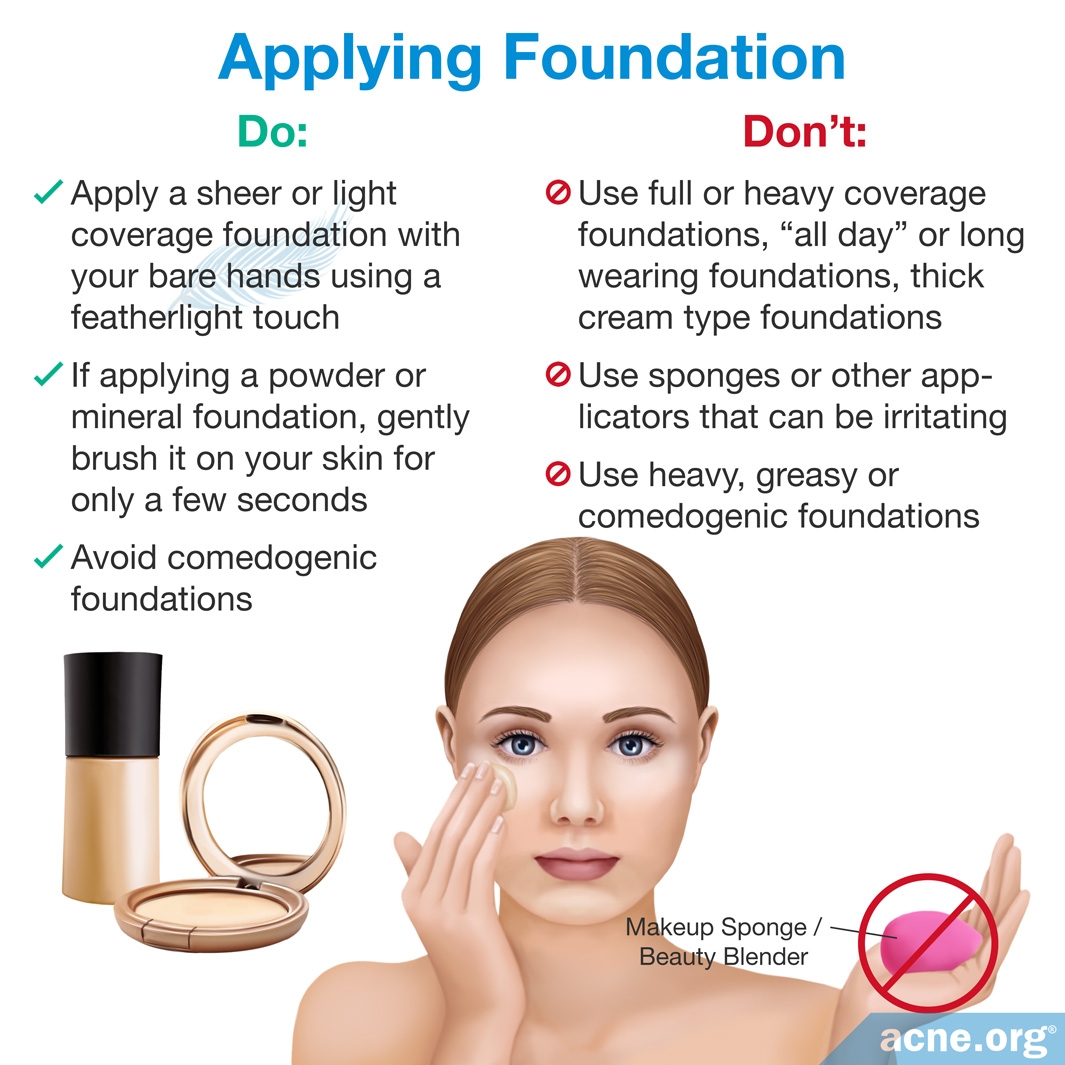
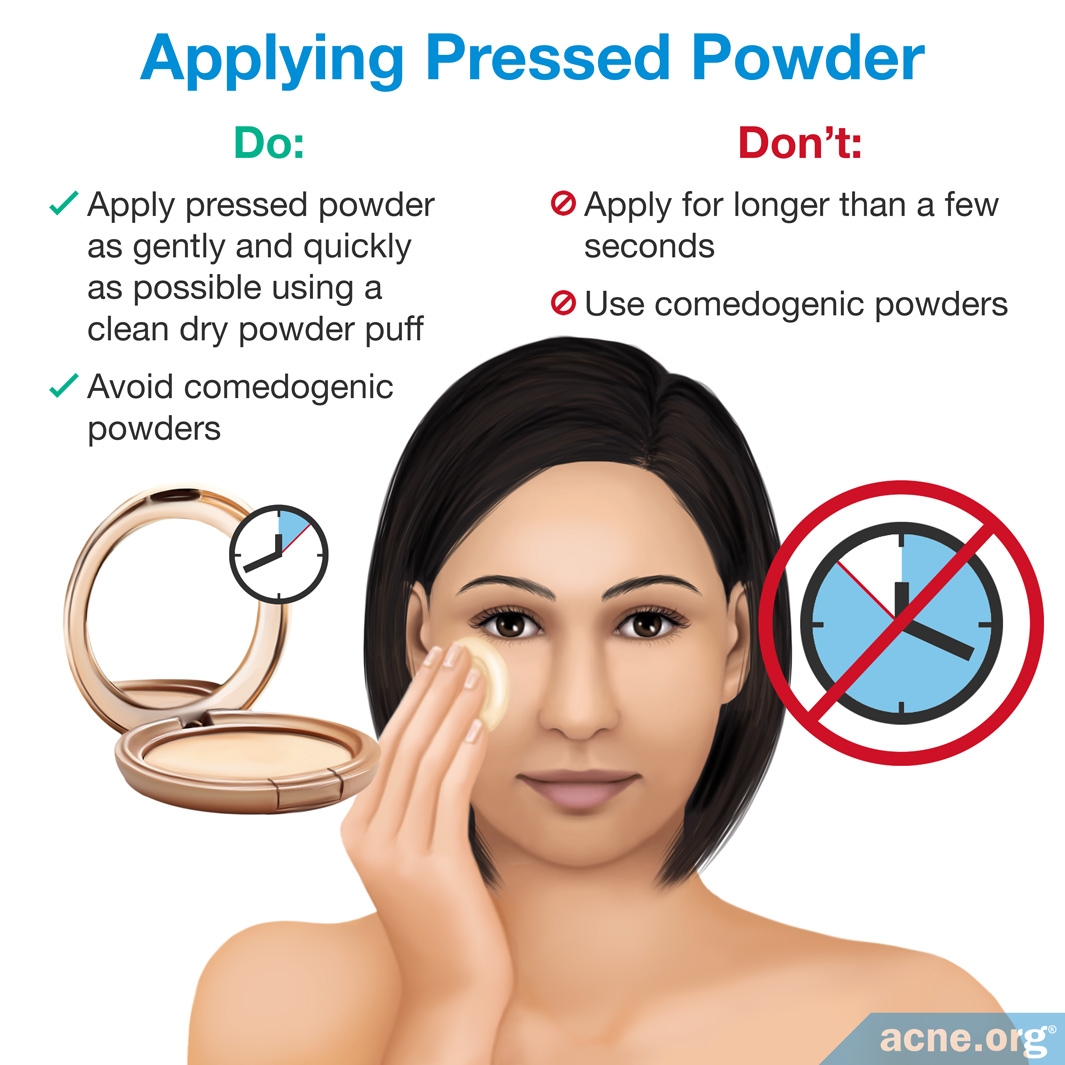
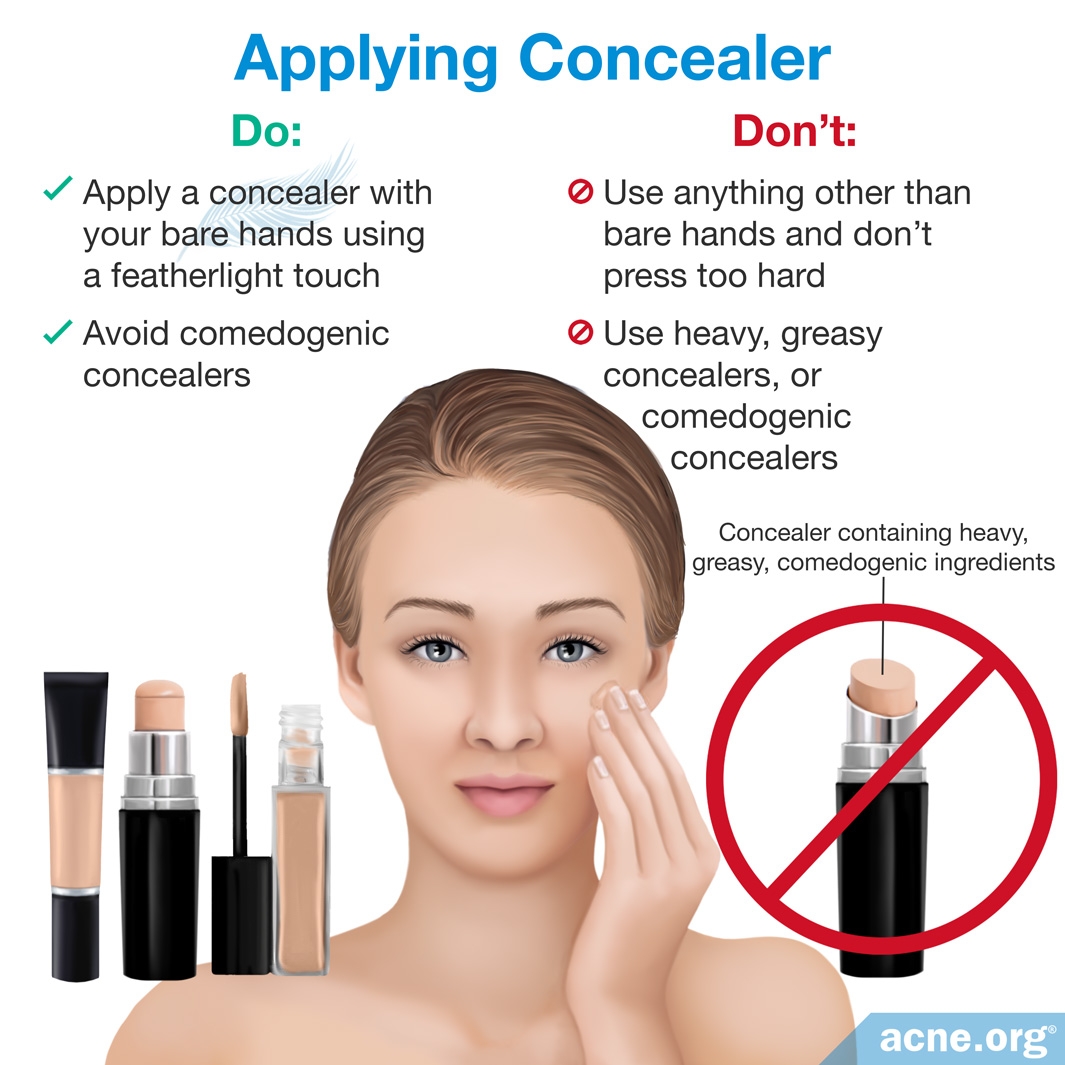
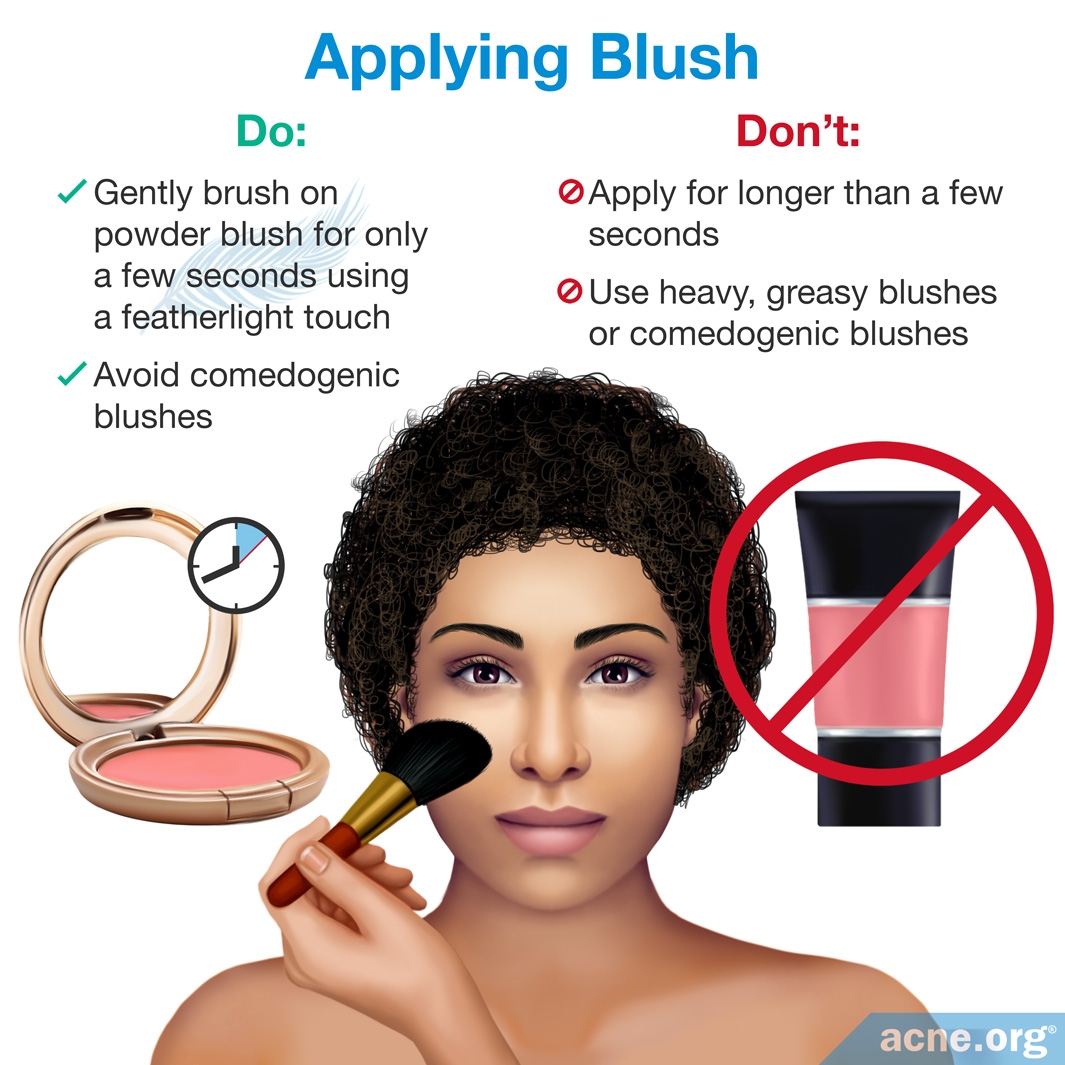
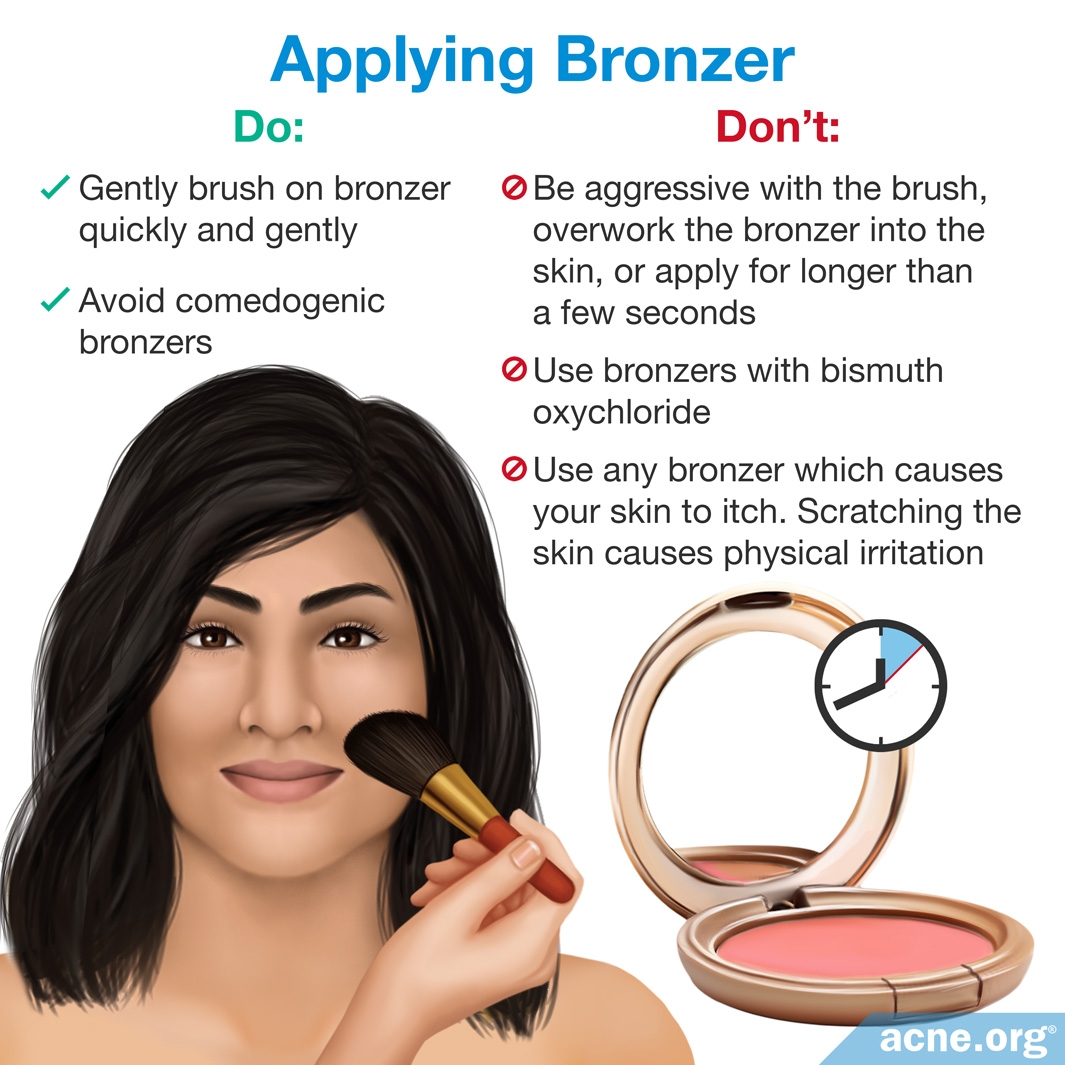
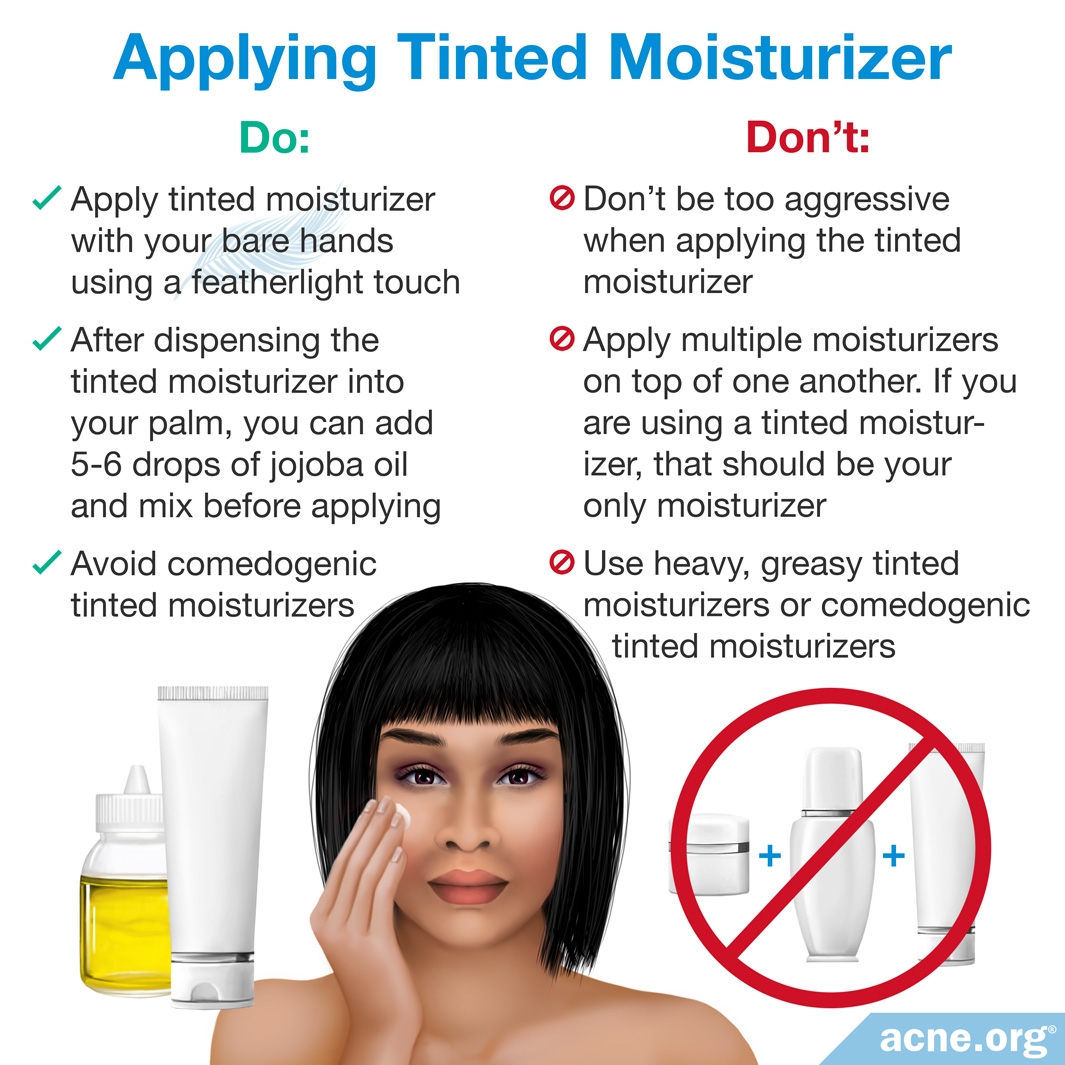
Instructions for Removing Makeup
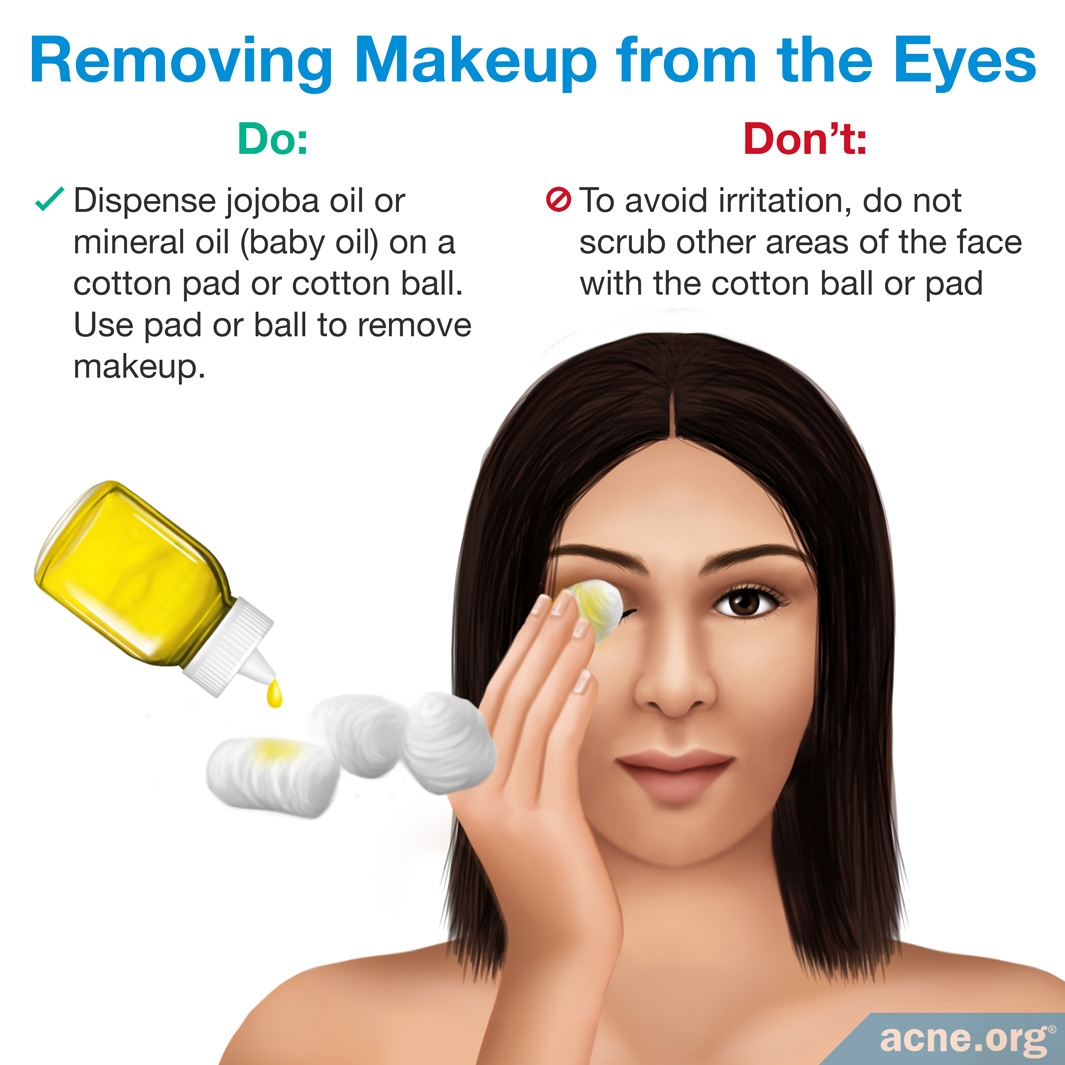
Eye makeup:
- Dispense mineral oil (baby oil) or jojoba oil on a cotton pad or cotton ball. Use pad or ball to remove makeup.
- To avoid irritation, practice not scrub other areas of the face up with the cotton fiber ball or pad.
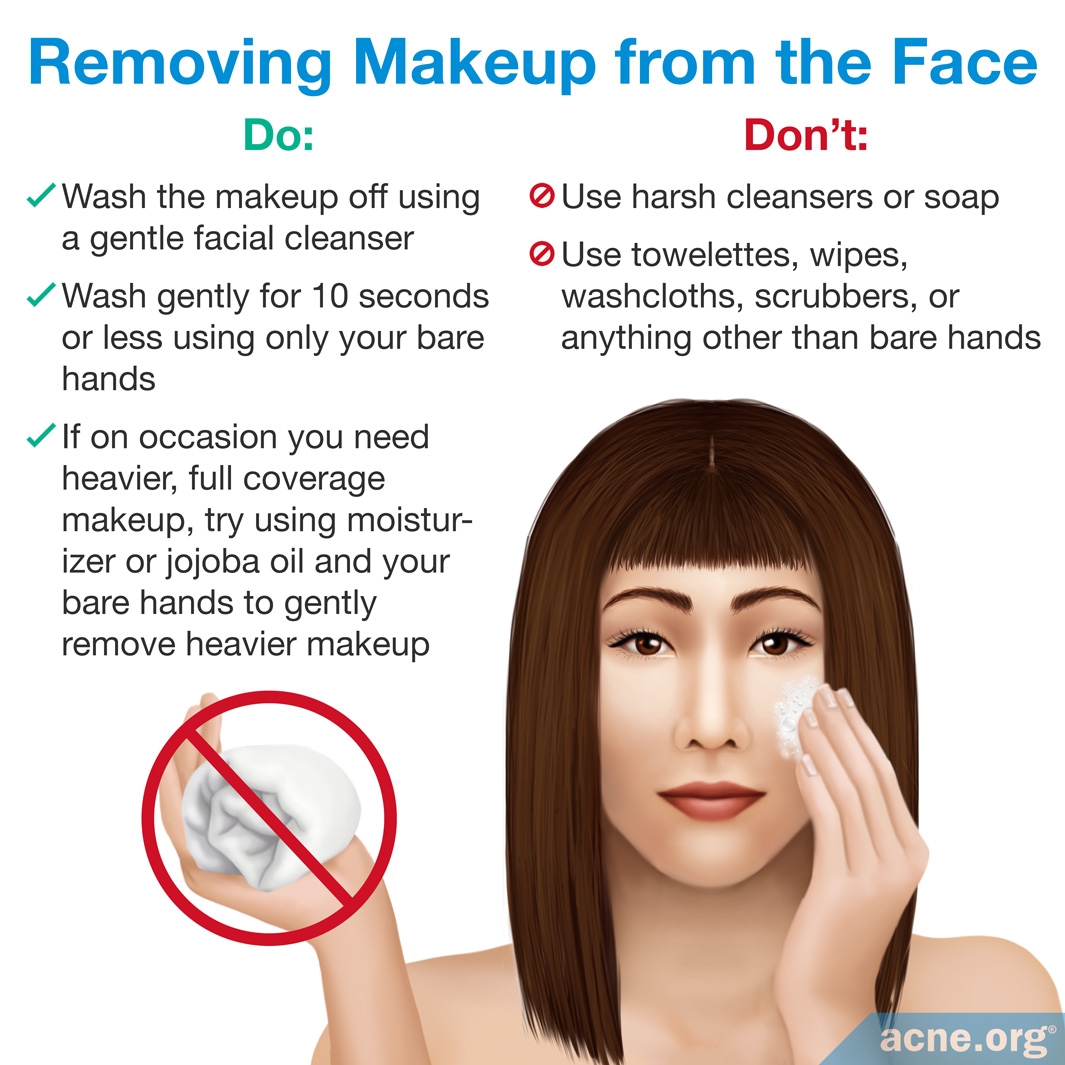
Foundation, powder, concealer, and blush:
- Launder off using facial cleanser very gently for 10 seconds or less using your bare hands, only as y'all would if you lot were on The Acne.org Regimen without makeup. See Footstep 1 above. Note: If your makeup does not come off easily by washing this way, switch brands to a lighter, more sheer variety. If on occasion you demand something stronger, try using moisturizer and your bare hands to gently remove makeup.
- Avoid using towelettes, wipes, washcloths, scrubbers, and anything other than bare hands.
Ingredients to Avoid
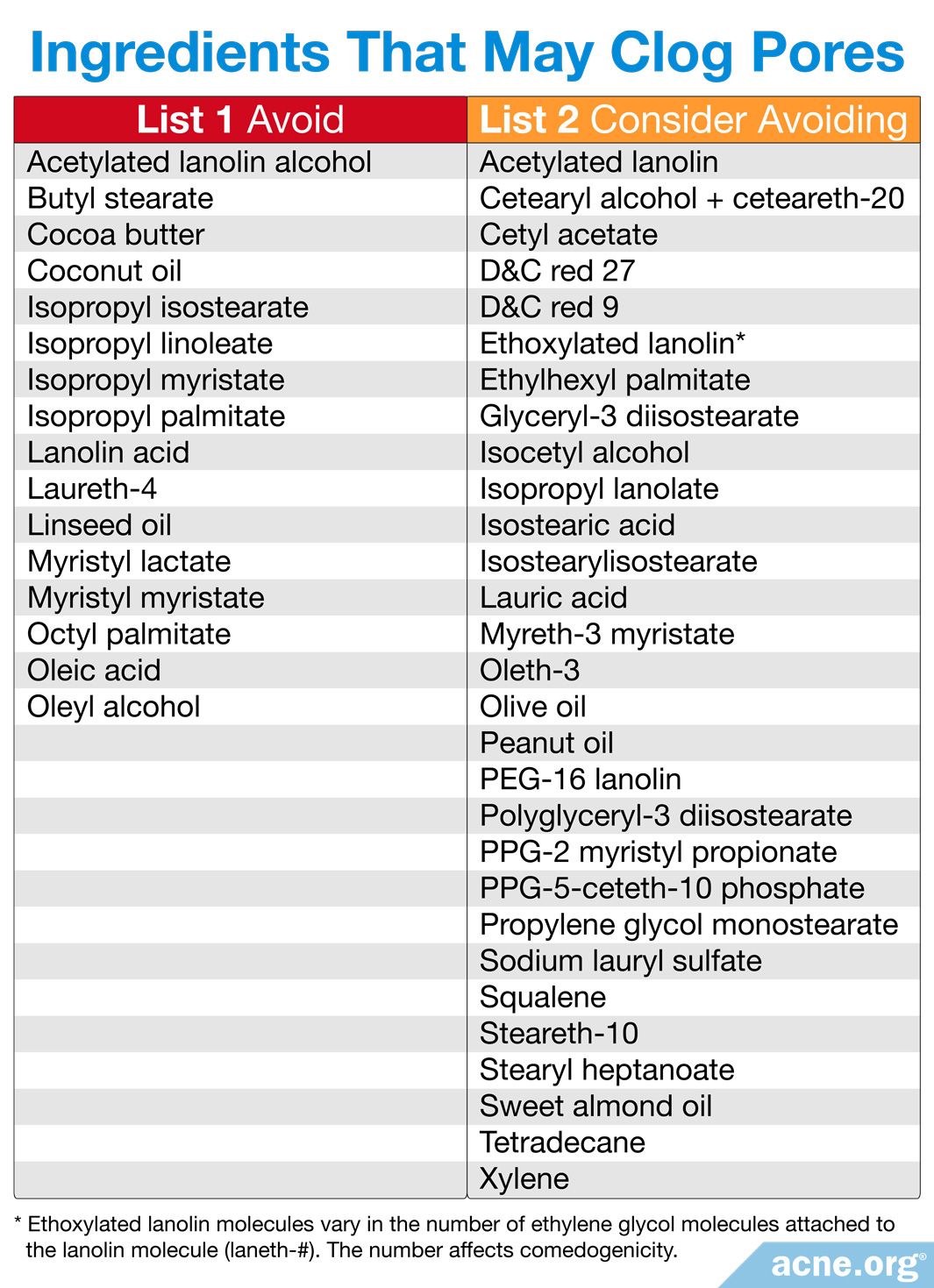
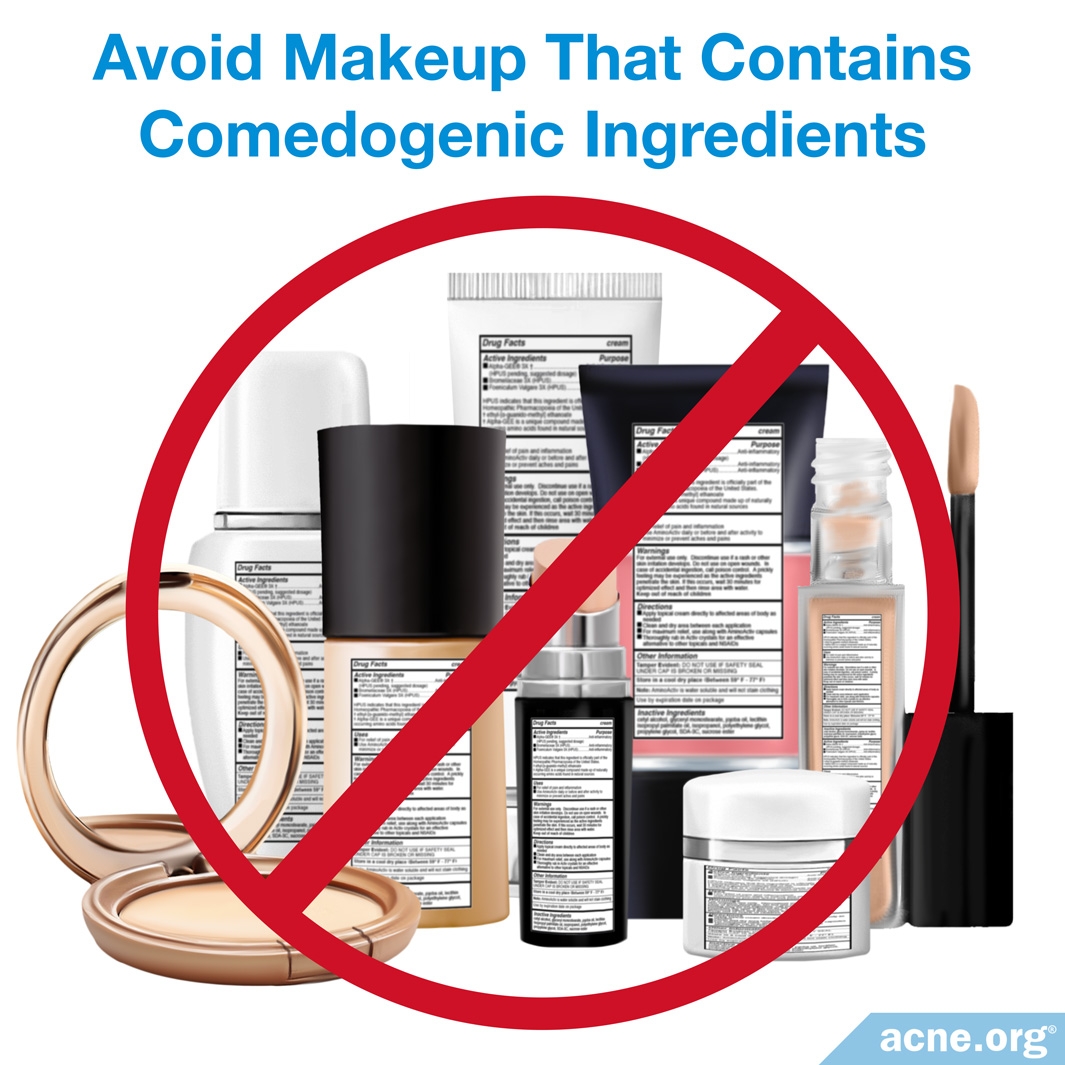
The table below lists ingredients that may be pore-clogging (comedogenic). If any of these are within the start seven (7) ingredients on the ingredient list of a makeup product you lot are choosing, you may desire to choose a unlike product.
If, however, any of these ingredients are far downward on the list, this ways the manufacturer may have included it in a very pocket-size amount and the product may even so be prophylactic to utilise.
- Definitely avoid: These are ingredients that people with acne-prone peel should definitely avoid, because compelling evidence shows that they are comedogenic.
- Consider avoiding: These are ingredients that people with acne-prone skin may want to consider fugitive, because some evidence indicates that they might exist comedogenic.
Source: https://www.acne.org/makeup-acne.html
Posted by: janusagelf2001.blogspot.com
0 Response to "How Do I Cover Up Acne On Chin With Makeup"
Post a Comment