

What Is The Profit Margin Of Makeup Palettes
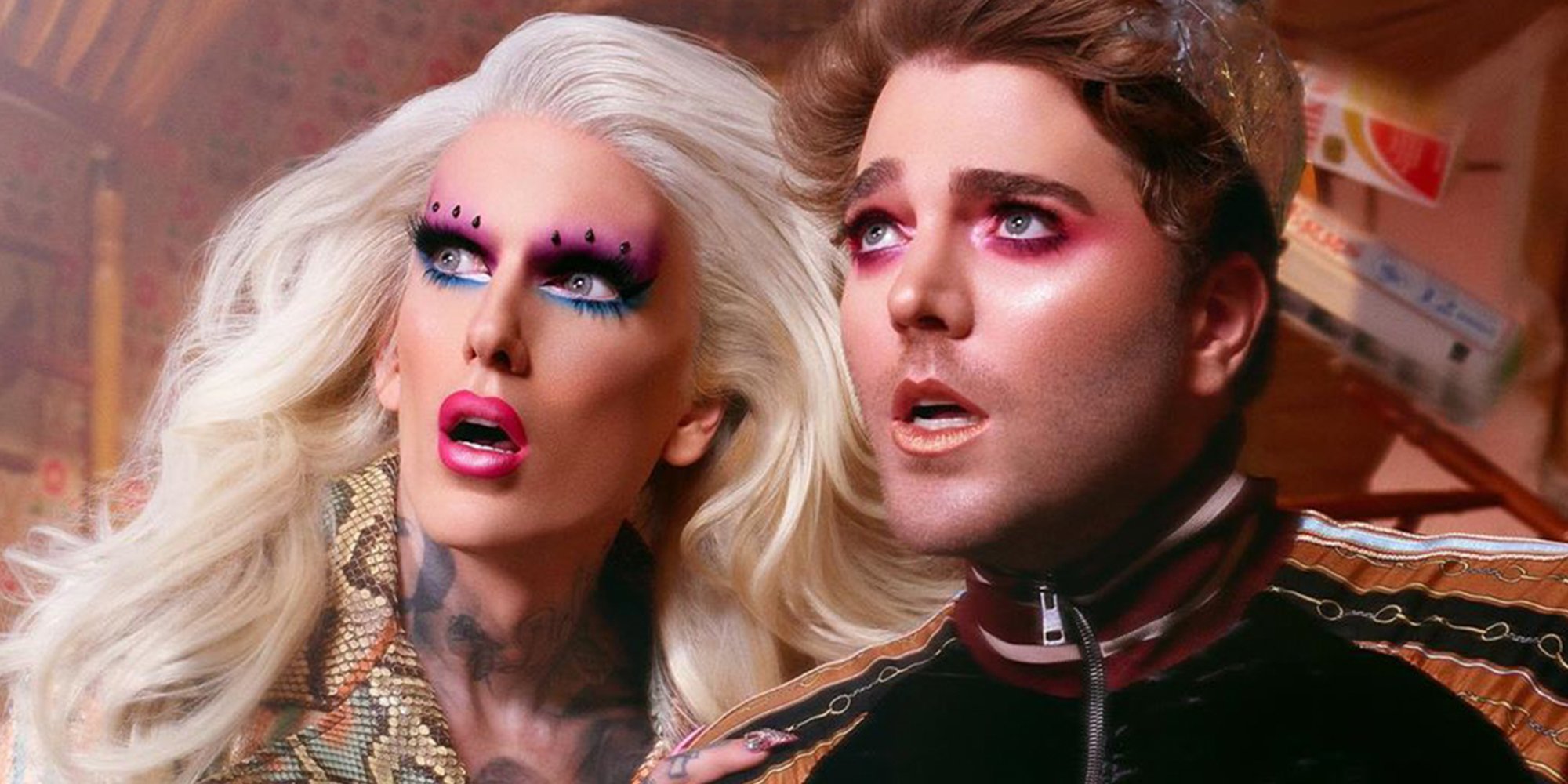
Even in a beauty industry nodding toward transparency, talking about money is taboo. Jeffree Star has broken that taboo big time.
Leading up to the super influencer and brand founder's collaboration with comedian and YouTuber Shane Dawson, the duo posted a docuseries featuring a chat with Emine ErSelcuk, vice president of global retail at Morphe, disclosing Morphe would potentially buy 350,000 to 500,000 units from their upcoming collaboration to yield $xiii million to $xx million in sales. In total, the pair disclosed the expectation that the collaboration would generate $35 million in sales. They are well on their way to that corporeality. Fans snapped up 1 million eyeshadow palette units from Star and Dawson's Conspiracy Collection in 30 minutes on Nov. 1. The brand is busy restocking 60,000 units of the collection's two palettes.
The more sensitive details disclosed by Dawson and Star involve the cost of makeup goods and influencer payment. They figured eyeshadow palette COGs oft ring in at $vii. For the Conspiracy Palette in their collection, the COGs are college, at $20, making the retail price 260% above the COGs. Retail prices can hands soar to 700% to a higher place COGs. On the topic of influencers, they pegged the typical influencer accept on a collaboration at 20% of sales. Dawson is commanding 25% to 30%. Star estimates Dawson will rake in $five one thousand thousand from the Conspiracy Drove on revenues from 1 palette alone.
Star and Dawson's openness has been welcomed by consumers, but makes many in the dazzler manufacture skittish. To understand why, Dazzler Independent checked in with thirteen beauty entrepreneurs, consultants and influencers to ask: What do you lot think of these money matters being shared, and would yous share them?
-

-
Sales figures are proficient to disclose if you're growing. Otherwise, they might not serve your narrative. Revealing profit margins on products could work for or confronting you, depending on your audience's perception of your margins and your brand ethos. For case, given wider margins, some customers think yous are beingness greedy. On the other hand, mayhap, they don't care so much nearly margins or transparency, which is something larger companies rely upon for success to a fairly large degree. I've seen brands accept success with providing some context and reasoning behind their margins by showing how much goes to sales, raw goods, manufacturing, etc. It's something people can respect and probably reply positively to, especially if it seems justifiable to them.
Smaller businesses have claimed moral loftier footing when it comes to natural, sustainable and earth-friendly practices. In many ways, we are under more scrutiny to provide transparency than larger businesses. At the aforementioned time, pocket-sized brands stand to gain a lot of trust with their user base.
I think [being transparent] does two things. First, it provides a window into how the sausage is made, which allows customers to meliorate understand the inner workings of a business. It likewise mayhap nudges the consumer toward doing more research to better understand things like the deviation between a proficient and a bad production, and what to look of cost given profit margins. Over fourth dimension, this could have a measurable outcome on people's expectations of products and probably bulldoze product quality towards higher standards and fairer pricing. 2d, information technology will likely bear on their stance of the company depending on how they evaluate the practices.
-
-
Transparency, within limits, tin can help a brand proceeds trust from consumers. It can prove a brand'southward ethical stance, may attract more customers and investors every bit a effect, and help the business grow. Too much transparency, such as disclosing amounts paid to influencers for advertising, will non be beneficial for the make in that influencers may demand the aforementioned payment is made all effectually. It may damage influencers too. Imagine this scenario: If all influencers demand the aforementioned payment from brands, the brands may make up one's mind they can only afford one mega influencer rather than xx of various influencers. This might reduce the corporeality of collaborations brands are able to offering. Negotiation and fees should be kept individual.
From a client's perspective, this information shouldn't make a difference to their conclusion whether to purchase from the brand or not. They tin can see from the financial statements what a brand has paid annually toward advertising, if the brand makes this information available. The influencer is e'er required to disembalm if it'south a paid partnership. If the customer believes an opinion to be influenced––and hence, dishonest––when a monetary exchange occurs, it won't matter if the payment was five or 500 pounds.
I think at that place should be transparency with regards to financial statements, but not for individual collaborations. Each influencer has their strengths and a toll they find acceptable. It's not necessary to disclose how much each collaboration costs, and I don't retrieve this will help the brands or the influencers in the long run. [It's] totally fine as a total annual expense to show a brand'due south total advertising upkeep. I also retrieve it'south expert to make commission percentages public every bit these tin can be stock-still and encourage promotion.
-
-
Transparency is always good when yous have naught to hide. Of course, sure things like personal information, company accounting figures, etc., should non exist released. However, things similar ecology policies, company mission statements and philosophies should be shared. Those are all of import elements of the overall brand values and company culture. Being transparent definitely builds up consumer trust as well as further positions the brand as successful to investors. Unfortunately, in that location is no existent way of checking whether a company is truly transparent as information technology is a generalized term. This is why I think it's adept to start by sharing policies, missions and other elements of the visitor's claimed civilisation.
Disclosing profits and sales should be entirely voluntary, as information technology can have some negative consequences. When we first reported sales of over $1 meg, our company was immediately targeted past hackers. They actually managed to get into one of our vendor's databases. They locked upwards of import files and demanded bitcoins to release them. Nosotros've also had hackers send fake invoices from real vendor emails. They got into their electronic mail servers. This is particularly dangerous as many companies pay invoices without double-verifying in person or over the phone that the receiving account number is correct. We've noticed that, even when your company is targeted and manages to avert any damage, it's common for the hackers then to aim at your vendors in hopes of finding 1 that has weaker security systems.
It's so important for customers to know where and who their money is supporting. If you want to alter the world, first by voting with your dollars. At the stop of the 24-hour interval, businesses are dependent on their customers and will always listen to them if plenty of them are requesting the same thing. When a business offers transparency, customers go a clearer overview of who they are supporting, and I recall that is neat. You can't claim to exist an upstanding make and have unethical company practices. And so, in this way, customers can take on a more active office in ensuring the authenticity of brand or visitor'south claims. Specially as a person of color myself, I've seen and been subjected to racism and atrocious behavior in the industry by those who merits to specialize in the opposite. Those experiences left me much more in favor of the public knowing what sort of people they are supporting with their spend.
-
Annie Tevelin Founder, SkinOwl
-
I believe money shouldn't exist discussed in most or all relationships. I don't talk about my salary to my friends. Therefore, I wouldn't talk most turn a profit and sales to my customers. It truly isn't anyone's business organisation in the same fashion our customer's salary isn't whatever of mine. I recollect by removing money and turn a profit from the chat, y'all permit your client to have a more enjoyable feel. Otherwise, it can open up the door to misinterpretation, judgement and misplaced curiosity. Transparency builds trust in a medium that has often felt secretive and out of attain. For a retail product to disclose their innermost practices shows that they have cypher to hide, which gives the consumer purchasing conviction. The con is that you might be asked to exist transparent in means you aren't comfortable with. Not all transparency begets other transparency. It is up to the brand to create boundaries for what lives in the public eye.
-
-
Transparency is very important to gain consumers' trust. I am for existence open to information near processes, civilization, values, production, ingredient sourcing, sustainability measures, things that straight concern the consumer. Disclosing confidential data such financials, formulas, vendors, sourcing, payments make it, unfortunately, easier to copy, especially in a very competitive market. So, I totally understand when a brand doesn't disembalm certain data. For a private company, I personally run across it equally a private information. Information technology is similar asking you to disclose your salary or income. Information technology is a personal conclusion.
The benefits of being transparent for brands is building trust and a relationship with the customer. The cons by and large relate to copying best practices, merchandise secrets, business organization model, etc. From a consumer perspective, the benefit of existence transparent is to let the consumer brand an informed purchase conclusion based on the consumers' values and priorities. The cons might be how certain data might be interpreted, and sometimes it requires simply more investment in educating the consumer.
-
Ric Kostick Co-Founder and CEO, 100% Pure
-
Transparency with sales figures, price of goods, profit margins, gild sizes and collaboration percentages can work equally a particular strategy, simply it can also distract brands. Nonetheless, you exercise have a glimpse into some of this with public companies in the dazzler industry, including sales, profit margins and, sometimes, the details of big celebrity and influencer partnerships. I suspect virtually consumers practise not actively research those financial statements, nor do they care that much nearly it because they still buy from brands with large gross margins and large sales volumes. The benefit of a product is more important to a customer than the costs of the product, the margins and influencer marketing spend.
A benefit of transparency for brands is if they primarily sell direct to the consumer, eliminating the resellers that cause prices to be higher, and apply the lower markup to gain analogousness with consumers through their value positioning. I have seen a couple of brands take this approach. Even so, there is more to a product than just the cost of the physical items that go into it. At that place is goodwill, creativity, innovation and emotion committed to that product with all those involved in its development that customers don't see. Elements that do not have a tangible value and are difficult to value on the surface level are sometimes challenging to explicate.
At the end of the day, the all-time companies sell intangibles. For instance, information technology could be to attain a happier, healthier life every bit we aim to do at 100% pure. This is what you are ultimately paying for and intangibles are the best return on your money. The cost of what the production you purchased from that company is negligible when compared to the benefit to the client.
From some other perspective, I meet the do good of transparency when it is integrated into the supply chain, and proves the authenticity of the ingredients and components of a product. This can requite consumers a better feeling when using these products to know the brand truly is what they claim to be. It's difficult to do this currently because of such complex supply chains, but progress is existence made.
Every bit for influencer payments, brands are all different sizes with different abilities to pay. Sometimes, influencers will lower their fees to work with smaller brands that are more than aligned with their values. If fees become public knowledge, it may change the behavior of how influencers choose their partnerships as they might want to maximize their reported value since that volition help them negotiate college future deals.
-
Sharon Cutler Founder, Uoma
-
Things like sales figures, price of goods, and turn a profit margins are boring. The consumer doesn't demand that information. It's too much. I don't want to exist an accountant when I walk into a shop. I just desire to buy what I recall is cool. With influencers, when there is a paid partnership, I do believe it should be disclosed. There is a trust relationship between the followers and the influencer. You used to exist able to watch television and know that y'all were watching an ad. Now, it'southward different. Consumers have the correct to be enlightened of what is an advertisement and how much that person was paid to promote the product. In the influencer customs, sometimes when someone has a good/assisting human relationship with a brand, they will intentionally ignore a competitor'south product or give it a bad review so it doesn't touch their paycheck. It'south tough.
Profits and sales are disclosed through financial reports, and a lot of companies do provide that information. Individual companies don't. I think that this isn't to hide from the consumer, but rather to hide from competitors. Yous don't desire your competitor to know how much you make, how you construction your business or your competitive reward. I wouldn't mind sending my customer an email and letting the know my profit margins, just I would heed my competitor seeing it. Consumers at the end of the day desire a dandy production. That's what they care about. Knowing that a company is more profitable than its competitor wouldn't change my mind most buying a product that I like.
-
-
In full general, transparency should be an integral part of the brand. For me, personally knowing if ingredients are ethically-sourced, the blazon of labor involved, and ingredients called are what I look for in a company that is transparent. I recall something such as overall sales or gild sizes should exist fabricated public to show how well a business organisation is doing. But a company is withal proprietary, and some things have to remain as such in lodge for the visitor to run successfully and earn margins. Depending on how specific a make gets, they may lose customers who may not support big companies. Conversely, a brand may proceeds customers based on its ability to be transparent.
-
Kristine Ravenscroft Founder and President, Beauty Gourmet
-
In a world where it is believed that a bulletin needs to exist conveyed in as few words as possible to grab a consumer's attention, it is difficult to imagine that providing consumers with all of this information would practise anything more than muddied the waters. You would have to sympathize all of the other associated costs that come up with that business like customer acquisition, chargebacks, expired inventory, etc. Toll of goods would be the most misleading effigy you lot could give someone who does not empathize the complexities of doing business concern in these industries. However, I do believe compensation to influencers should be disclosed or at to the lowest degree that there was some bounty. Nosotros demand to know when the people we trust have potentially other driving motivations to promote a production besides the fact that they simply recall it is a wonderful production.
For the most part, brands have so much to gain with transparency. Today, consumers practise not desire to be provided a generic product from a huge faceless conglomerate. They desire to know who is driving the decisions at a company, why that company exists, and if that company is meeting the commonage goals of everyone involved. For u.s., ingredient transparency is huge. Consumers want to know what is in their products and where those ingredients come from. By providing ingredient transparency, information technology also allows united states to go on to brand our products ameliorate based on consumer preferences. We all win.
Over again, sales and profits are not all telling figures. If a smaller visitor put all of their coin back into the business organization and they are running at a loss, would that brand the product ameliorate or worse? These are moving targets. Did a company invest a sure corporeality of money and fourth dimension to create a new ingredient? Would that investment show in sales and profits? These figures are more complicated than they appear. I believe transparency best serves us in the ingredients and processes a company uses to create their products. If you are transparent on that, the consumer can make an educated determination if a product is worth it compared to other options available on the market.
The do good of being transparent would be that you could get valuable feedback to tailor your products to more specifically encounter consumer needs all while gaining consumer loyalty as people tend to purchase from people they trust. The disadvantage would exist if the metrics used for transparency did not tell the whole story, consumers could exist given an inaccurate impression of the bodily price of doing business or some other scarlet-picked reference point. This could give a false impression of the business organization or the product.
-
-
I call up information technology'due south up to the brand possessor to make this type of telephone call. I do think there should be a salubrious medium. No 1 will understand your audience amend than you as the brand owner. Customers love honesty. Can they handle it? [That's] the truthful question. Nosotros have to call up near information technology like this. If it's a publicly-traded company, all of the financial information volition be readily available and can be easily accessed. I think the only con would be the consumer would second estimate paying in excess if they experience the retail price is too high. The consumer will as well expect to be informed on every project going forrard. It's almost similar your consumer is now the acting board of directors in a sense. The benefit would be the possible financial gains due to the transparency and openness. The consumer will desire to spend their difficult-earned dollars on your brand.
-
Rachel Mulcahy Founder and CEO, Ivy Wild
-
Consumers take get more than savvy when it comes to how they apply their spending ability. Nigh consumers already empathise that brands mark upward product pricing in order to be more than profitable. They already know that influencers are paid for their collaboration with brands. I think the real opportunities for brands to offering transparency are related to quality, cost of materials and ethical practices. Many of the clean brands we work with practise non take the scale and efficiency of mainstream traditional brands, and they face higher ingredient sourcing and production costs. Additionally, some of these make clean indie brands are investing more in fair trade partnerships and sustainable ingredient sourcing. In almost cases, they are still pricing products within range of larger prestige brands who may not exist following the same standards. For larger prestige brands, offer more transparency is a big opportunity to win consumer preference.
For clean, sustainable and ethical brands, transparency helps consumers sympathize what they are paying for. Many consumers are willing to pay slightly more for a product when they understand that high quality ingredients cost more simply are safer and better for them. If a brand is following sourcing and production practices that are more environmentally sustainable or they are supporting fair trade/work weather, consumers will understand that and appreciate it. Brands should help people make informed choices about where they spend their money.
-
-
Transparency is an interesting topic. It's super controversial and somewhat of a trade clandestine. A trade clandestine to me is something about your business concern that y'all know or do meliorate than someone else or another company. So, if yous start comparing business just on the margins solitary, it is not looking at the whole motion-picture show. You could take a visitor that has low margins, but never invests in company culture, etc. Whereas a similar company may likewise have low margins, just invests in the visitor and staff. Information technology is not apples to apples here.
Formulas are trade hush-hush, and the way businesses are operated –– not merely toll of appurtenances sold –– are proprietary. So, although information could be shared, information technology is what gives ane make a competitive advantage over some other. Every consumer make is like. We all brand items for less and sell them for more. That is how it works. If brands want to expose their margins, they could, but there are always ways to manipulate numbers. Then, fifty-fifty if some brands disembalm, in that location is no governing body to manage this. How do we even know information technology would exist accurate?
-
-
Industry execs worry transparency sheds a bad light by exposing margins, but, in fact, fan reviews [validated Jeffree Star's] the hard work. Complete transparency shows that the industry is non easy to break into and requires a serious amount of diligence to make it happen. Influencer pay is a major concern for the industry. After Likewise Faced and NikkieTutorials' collaboration, fans are watching, and whistleblowers are eager to release the latest facts and figures. For us, as a visitor, nosotros need to brand sure plans are fair and balanced with an upside for success for the influencers.
In full transparency, nosotros tend to have lower margins to avoid gouging claims. But, by choosing to share certain data, you tin can be semi-transparent without adversely affecting the lesser line. For us, nosotros choose not to disclose our sales figures, an option for virtually privately=held indie beauty brands. Nosotros discover that disclosure tin affect decisions about carrying your line. The conclusion to disembalm comes down to how strong the numbers look and what connections volition it open or shut down.
If you accept a question you'd like Beauty Independent to ask dazzler entrepreneurs, please send it to editor@beautyindependent.com .
Source: https://www.beautyindependent.com/jeffree-star-shane-dawson-reveal-beauty-industry-money-secrets/
Posted by: janusagelf2001.blogspot.com
0 Response to "What Is The Profit Margin Of Makeup Palettes"
Post a Comment